

·Apmo Team
Acne on Dark Skin: How to Treat Breakouts Without Making the Marks Worse
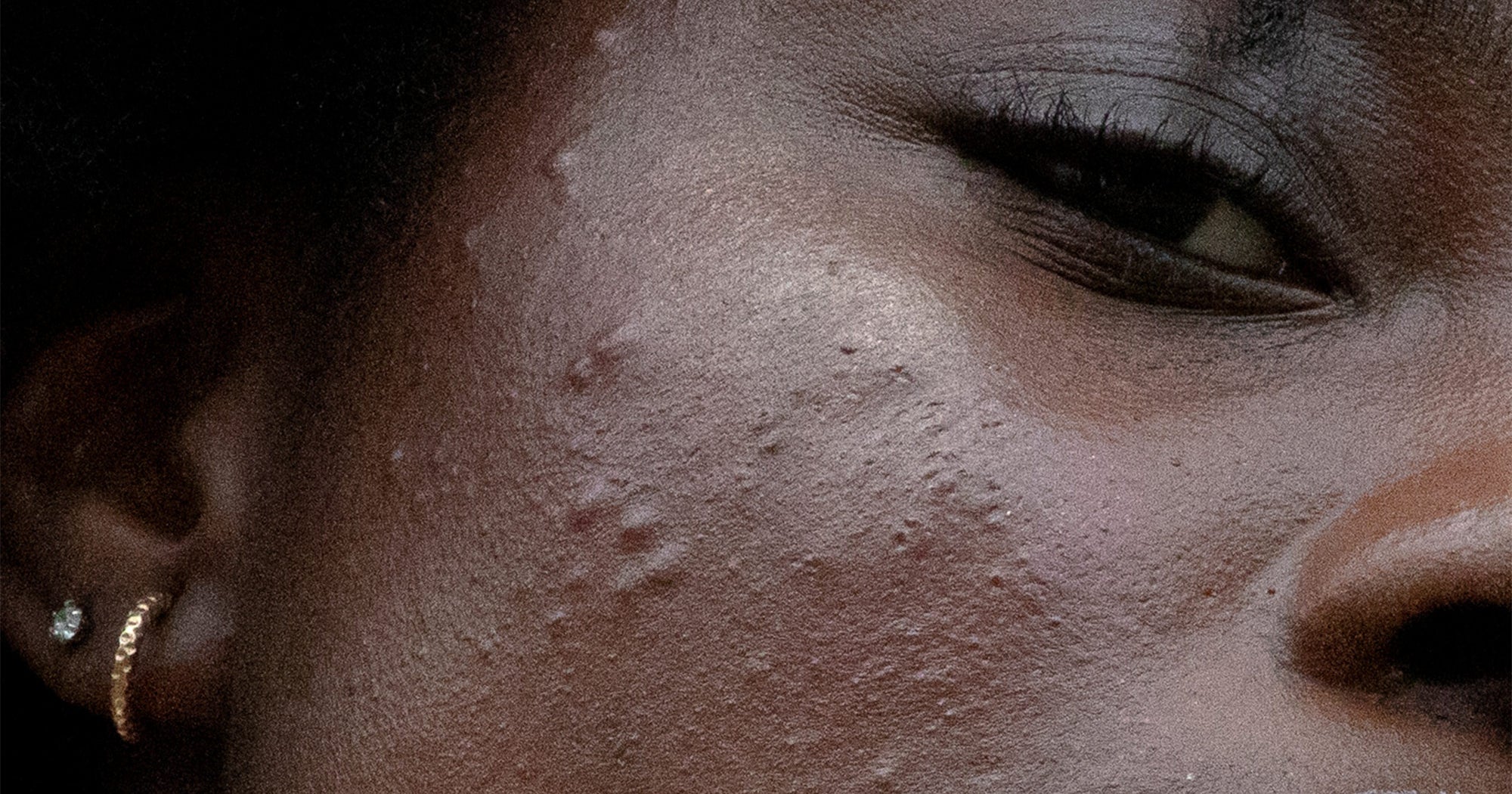
Acne can affect anyone, regardless of skin tone. But if you have brown or black skin, there is another problem that often comes with the breakout:
Acne on Dark Skin: How to Treat Breakouts Without Making the Marks Worse
Acne can affect anyone, regardless of skin tone. But if you have brown or black skin, there is another problem that often comes with the breakout:
The dark mark it leaves behind.
A pimple may disappear in a few days or weeks, yet the darker patch left in its place can remain for months. Dermatologists call this post-inflammatory hyperpigmentation (PIH), and it is particularly common in people with darker skin tones.
So when caring for acne-prone dark skin, the goal isn't simply to get rid of pimples.
It's also to reduce irritation and prevent unnecessary inflammation that can leave more marks behind.
1. Don't attack your skin
One of the biggest mistakes people make when dealing with acne is trying to "scrub it away."
Harsh scrubs, aggressive exfoliation, repeatedly washing the face or using products that burn and sting can irritate the skin. That irritation can make acne harder to manage and may contribute to more pigmentation.
Your skin doesn't need punishment.
It needs consistency.
2. Keep your face clean—but don't over-cleanse
A gentle cleanser can help remove sweat, excess oil, dirt and other impurities without unnecessarily irritating the skin.
Wash gently with your fingertips rather than aggressively scrubbing with rough cloths or tools.
A simple morning and evening cleansing routine can be much more useful than repeatedly washing your face throughout the day.
APMO recommendation
APMO Facial Wash is designed as a gentle herbal facial cleanser and is intended for morning and evening use. Its product directions recommend applying it to a wet face, massaging gently and rinsing with clean water.
The key here is the gentle cleansing—not trying to strip every trace of oil from your skin.
3. Don't squeeze your pimples
We know.
That pimple is sitting there looking like it needs to be dealt with immediately.
But picking, squeezing or popping acne can increase inflammation and raise the risk of both scarring and dark marks.
For darker skin, this matters even more because the inflammation from a breakout can trigger excess melanin production and leave behind noticeable pigmentation.
Hands off. Let the skin heal.
4. Moisturize—even if your skin is oily
Oily skin can still need moisturizing.
Oil and hydration aren't the same thing, and excessively drying your skin isn't a good acne strategy.
The right moisturizer should feel comfortable on your skin and fit your skin type.
However, don't assume that every moisturizer is suitable for acne-prone skin. Look for formulations appropriate for your skin and, where possible, products labeled non-comedogenic.
APMO recommendation
APMO's Facial Cream is described as having a **lightweight, non-greasy finish**, with the company's product information positioning it primarily for normal-to-dry skin.
So if your skin is normal to dry and acne-prone, it may fit into a moisturizing routine—but if you're very oily or frequently breaking out, choose skincare based on how your individual skin responds rather than assuming one moisturizer works for everyone.
---
5. Protect your skin from the sun
This is particularly important when you're dealing with dark marks.
UV exposure can worsen hyperpigmentation and make existing spots take longer to fade. Dermatologists recommend broad-spectrum sunscreen with SPF 30 or higher, and for hyperpigmentation in darker skin tones, tinted sunscreen containing iron oxides can provide additional protection against visible light.
So your acne routine shouldn't end when the pimple disappears.
Protect the skin while it heals.
---
6. Treat acne—not just the marks
It can be tempting to concentrate entirely on getting rid of the dark spots.
But if new acne keeps appearing, you're continuously creating new inflammation and therefore new opportunities for pigmentation.
The first step is getting the breakouts under control. Once the underlying acne is managed, the resulting dark marks can be addressed separately.
Ingredients commonly used in evidence-based acne treatment include benzoyl peroxide, salicylic acid, adapalene and azelaic acid, depending on the type and severity of acne. Azelaic acid is particularly useful because it can help treat acne while also reducing pigmentation.
These are treatment ingredients—not ingredients we should casually add to an APMO article unless they're actually present in the relevant APMO product.
7. Be patient with the dark marks
One of the most frustrating parts of acne on dark skin is that the pimple can be gone while the mark remains.
That's normal.
PIH can take months to fade, and darker spots can sometimes take a year or longer.
Don't respond by attacking the pigmentation with increasingly harsh products.
Gentle + consistent + protected is a much better approach.
When should you see a dermatologist?
If you're experiencing:
* Deep or painful acne
* Frequent breakouts
* Acne that is leaving scars
* Large numbers of dark marks
* Acne that isn't improving with your routine
* Significant emotional distress because of your skin
it's worth speaking with a dermatologist.
Persistent or severe acne can require medical treatment, and early treatment can reduce the risk of lasting scars and pigmentation.
The APMO Approach
Good skincare isn't about trying to make dark skin look lighter.
It's about keeping your natural skin healthy, comfortable and even-looking.
Start with gentle cleansing, avoid unnecessary irritation, moisturize appropriately, protect your skin from the sun and use evidence-based acne treatments when needed.
For a simple cleansing step, APMO Facial Wash can be incorporated into a morning and evening routine according to its directions.
And if your skin is normal to dry and needs a lightweight moisturizer, APMO Facial Cream is formulated with a non-greasy finish and is positioned by APMO for normal-to-dry skin.
Your dark skin doesn't need to be changed. It needs to be cared for.
APMO — Care for the skin you're in.