

·Apmo Team
Eating Avocado vs. Applying Avocado to Your Skin: What’s the Difference?
Did you know eating avocado and applying it to your skin are NOT the same thing? When you eat avocado, its nutrients go through your digestive system, enter your bloodstream and are distributed throughout your body. When avocado-derived ingredients are applied topically, they interact directly with the outer layers of your skin. That means they can serve different purposes Eating avocado can support your skin through nutrition, while properly formulated avocado-based skincare can help moisturize and support the skin barrier directly. Same fruit. Different delivery. Different role in your skincare routine. Read the full article to understand what actually happens when avocado meets your skin.
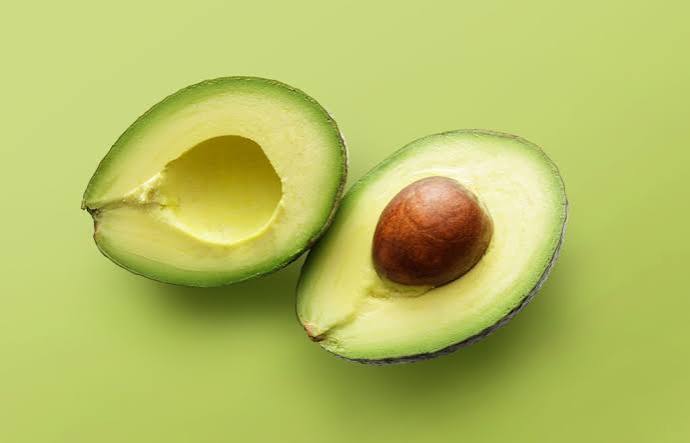
Avocado is often praised as a “beauty food” because it contains healthy fats, vitamin E, carotenoids and other compounds associated with skin health. But there is an important difference between eating avocado and applying avocado directly to your skin.
They may come from the same fruit, but your body handles them in completely different ways.
1. Eating avocado works from the inside out
When you eat avocado, its nutrients first travel through your digestive system.
The fats, vitamins and other compounds are digested and absorbed through the intestine, enter the bloodstream and are then distributed throughout the body. Some nutrients can eventually contribute to the skin’s nutritional environment. (PubMed)
Avocado provides nutrients including monounsaturated fats, carotenoids and vitamin E. These compounds are part of the reason avocado is considered a nutritious addition to the diet. (PubMed)
There is even some clinical evidence suggesting that regular avocado consumption may benefit certain aspects of skin appearance. In one small randomized study, women who ate one avocado daily for eight weeks experienced improvements in facial skin elasticity and firmness compared with baseline, although the study did not find significant changes in skin hydration, pigmentation, sebum or UVB resistance. (PubMed)
So eating avocado can support skin health through nutrition and the body’s internal processes.
⸻
2. Applying avocado directly is a completely different process
When avocado or an avocado-derived ingredient is applied to the skin, it doesn’t have to travel through your digestive system first.
Instead, the material is placed directly onto the skin’s outer surface.
This means components such as oils and lipids can interact directly with the stratum corneum, the outermost layer of the skin.
Plant oils have been studied for their potential effects on skin barrier function, moisture loss, inflammation and other aspects of skin condition. Avocado oil is among the plant oils investigated in this area. (PubMed)
This is why a topical avocado-based product can have a different immediate cosmetic effect from simply eating an avocado.
⸻
3. The skin doesn’t receive the whole avocado when you eat it
This is the part people often misunderstand.
If you eat an avocado, your digestive system breaks it down. Your body then absorbs and distributes its nutrients according to its physiological needs.
Your skin isn’t simply receiving a spoonful of avocado.
Instead, nutrients have to:
Avocado → digestion → intestinal absorption → bloodstream → tissues → skin
With topical application, the route is more like:
Avocado-derived ingredient → skin surface → interaction with the outer skin layers
The two routes are therefore fundamentally different. (PubMed)
⸻
4. A topical product can also be formulated specifically for the skin
There is another major difference between putting mashed avocado on your face and using a properly formulated skincare product containing avocado-derived ingredients.
A skincare formulation can be designed around:
- The concentration of an ingredient
- The type of oil or extract used
- Stability
- Texture
- Absorption
- Preservation
- Compatibility with other ingredients
- Skin feel
That is why “avocado is good for you” doesn’t automatically mean that putting raw avocado on your face is equivalent to using a professionally formulated avocado skincare product.
Formulation matters.
⸻
5. What about the famous avocado face mask?
A homemade avocado mask can leave the skin feeling soft because avocado contains fats and other compounds that can temporarily improve the feel of dry skin.
But there is a major caveat:
Natural does not automatically mean better or safer.
Raw food applied to the face hasn’t necessarily been formulated, preserved or tested for cosmetic use. Depending on the individual, it may also cause irritation or other reactions.
A properly formulated skincare product has the advantage of being designed specifically for application to the skin.
⸻
6. So which is better: eating it or applying it?
The answer isn’t really either/or.
They serve different purposes.
Eating avocado
Supports the body nutritionally and provides nutrients that may contribute to overall skin health.
Topical avocado-derived ingredients
Can interact directly with the skin and may contribute to moisturization, softness and skin-barrier support depending on the formulation and ingredient used. Research on topical plant oils supports potential effects on skin barrier and inflammation, although results vary by oil, formulation and skin condition. (PubMed)
The best way to think about it is:
Eating avocado nourishes your body from within. Topical avocado-based skincare works directly on the skin.
Neither replaces the other.
⸻
The APMO Takeaway
Healthy skin isn’t about one ingredient alone.
It is about nutrition, hydration, cleansing, moisturization, sun protection and a consistent skincare routine.
Avocado can play a role in both nutrition and skincare, but the way it is delivered makes a difference.
So the next time someone says:
“Why buy an avocado skincare product when I can just eat an avocado?”
The answer is simple:
Because your digestive system and your skin are two different delivery routes.
What you eat can support your skin from within, while appropriately formulated topical skincare is designed to work directly on the skin.
Healthy skin starts from within—but good skincare works from the outside too.